
Sui defi in 2026: the real limits to account for
The 2026 narrative around Sui DeFi has shifted from speculative hype to structural reality. While early optimism focused on raw transaction speed and low fees, the current landscape is defined by liquidity fragmentation and the maturation of intent-centric primitives. Understanding what actually works in this environment requires looking past the marketing claims and examining the on-chain mechanics that drive sustainable yield.
The primary constraint for 2026 is not network throughput, but composability. Sui’s object-centric model allows for parallel processing, yet many DeFi protocols still struggle to integrate seamlessly across different liquidity layers. Liquid staking derivatives (LSDs) have become the backbone of this ecosystem, but their value proposition depends heavily on the efficiency of their rebasing mechanisms and the security of their underlying validators. Without robust LSD infrastructure, higher-order DeFi applications remain isolated silos rather than a unified financial stack.
Intent-centric architectures are emerging as the solution to this fragmentation. By decoupling order submission from execution, these primitives allow users to specify desired outcomes—such as best execution price or slippage tolerance—while specialized solvers compete to fulfill them. This model reduces the cognitive load on users and minimizes failed transactions, but it introduces new risks related to solver centralization and MEV extraction. The success of Sui’s DeFi renaissance in 2026 will hinge on whether these intent layers can achieve sufficient decentralization and transparency to trustlessly manage user funds.
For investors and developers, the focus must shift from chasing the next high-yield farm to evaluating the structural integrity of these new primitives. The protocols that survive 2026 will be those that prioritize sustainable liquidity depth over short-term token emissions, leveraging Sui’s unique technical advantages to create genuinely composable financial products.
Sui defi 2026 choices that change the plan
Choosing a DeFi primitive on Sui in 2026 requires balancing yield potential against operational complexity. The ecosystem’s move toward intent-centric architectures and liquid staking derivatives (LSDs) has created distinct paths for capital deployment. Each approach carries specific tradeoffs regarding capital efficiency, smart contract risk, and user experience.
Liquid staking remains the entry point for most participants. By depositing SUI into protocols like Cetus or Scallop, users receive stSUI or similar tokens. This offers immediate liquidity and the ability to use staked assets across lending markets. However, it introduces smart contract risk and potential basis risk if the staked asset trades at a discount to the underlying token.
Intent-centric primitives, such as those powering Current, shift the execution burden from the user to solvers. This simplifies yield generation but requires trust in the solver network’s ability to find optimal paths without frontrunning or excessive slippage. The tradeoff here is convenience versus transparency; users gain ease of use but lose direct visibility into the transaction routing.
| Primitive | Capital Efficiency | Complexity | Primary Risk |
|---|---|---|---|
| Liquid Staking | High | Low | Smart Contract |
| Intent-Centric | Medium | Low | Solver Centralization |
| Native Staking | Low | Medium | Illiquidity |
| Yield Aggregation | High | High | Strategy Failure |
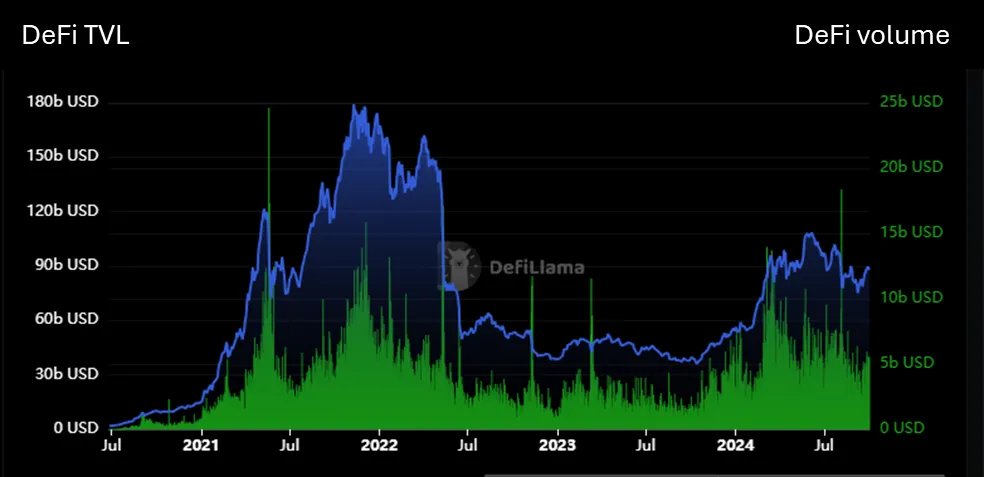
Technical analysis of SUI’s price action suggests volatility will remain a key factor in yield strategies. Traders should monitor support levels and volume trends to time entries. The following chart provides a technical perspective on recent market movements.
Current market conditions favor a diversified approach. Rather than committing all capital to a single primitive, consider splitting exposure between liquid staking for stability and intent-based yields for growth. Always verify the audit status of any new protocol before depositing funds.
Choose the next step
Sui's DeFi Renaissance works best as a clear sequence: define the constraint, compare the realistic options, test the tradeoff, and choose the path with the fewest hidden costs. That order keeps the advice usable instead of decorative. After each step, pause long enough to check whether the recommendation still fits the reader's actual situation. If it depends on perfect timing, unusual access, or a best-case budget, include a simpler fallback.
Spotting Misleading Sui DeFi Claims
The 2026 Sui ecosystem promises high throughput and low fees, but not every protocol delivers. Many projects market "intent-centric" primitives as revolutionary, yet they often lack transparent audit trails or rely on centralized relayers that defeat the purpose of decentralization. When evaluating liquid staking derivatives (LSDs), look for clear proof of reserves and independent verification of the underlying staked SUI tokens.
Common mistakes include ignoring the slippage risks in intent-based order routing or assuming that higher yields always mean better security. Some protocols advertise "instant finality" without disclosing the validator requirements or the potential for centralization in their consensus layer. Always check if the protocol uses Sui’s Move language correctly to prevent reentrancy attacks, a known vulnerability in poorly written smart contracts.
To avoid weak options, prioritize projects with published security audits from reputable firms like Trail of Bits or OpenZeppelin. Be wary of tokens with high inflation rates disguised as "community incentives." A sustainable DeFi model on Sui should demonstrate real user activity and revenue generation, not just speculative token emissions. Verify that any LSD protocol allows for easy redemption and has a history of reliable uptime during network congestion.
Sui defi 2026: what to check next
Investors are weighing the potential of Sui’s liquid staking and intent-centric primitives against market volatility. Here are the practical answers to the most common questions about the ecosystem’s trajectory in 2026.
How high can Sui go in 2026?
Market projections for September 2026 suggest SUI could trade between a minimum of $0.0028924 and a maximum of $2.46, with an average prediction of $1.23. These figures depend heavily on the successful adoption of new DeFi protocols and broader crypto market sentiment.
Is Sui a good investment for 2026?
Sui offers a high-performance Layer 1 architecture with horizontal scaling and low fees, making it attractive for developers building composable dApps. However, as with any crypto asset, it carries high risk. Diversification and careful due diligence are essential before allocating capital to ecosystem tokens.
What is the best Sui DeFi protocol in 2026?
The landscape is consolidating, with Bluewater acquiring top protocols like Suilend to deepen its ecosystem footprint. Investors should look for protocols that offer transparent yield sources and robust security audits, as the market favors established players over speculative new entrants.
How does liquid staking work on Sui?
Liquid staking allows users to stake SUI tokens while receiving liquid staking tokens (LSTs) that represent their stake. These LSTs can be used in other DeFi activities, such as lending or trading, enabling users to earn dual yields from both staking rewards and DeFi interactions.
No comments yet. Be the first to share your thoughts!