
Sui defi 2026: the limits to account for
The defining constraint for Sui DeFi in 2026 is not capital efficiency, but execution parallelism. Sui’s Move-based architecture treats assets as objects rather than global state, allowing transactions to execute simultaneously when they touch different objects. This shifts the bottleneck from block time to object contention.
For liquidity providers, this means traditional AMM models face new frictions. When multiple users interact with the same liquidity pool object, transactions serialize, creating latency spikes during high volume. The 2026 playbook requires selecting protocols that distribute liquidity across multiple objects to maintain throughput.
This architectural choice favors object-centric primitives. Protocols that bundle related assets or use dynamic routing can bypass contention points. The result is a DeFi landscape where speed is determined by data locality, not just gas fees. Understanding this constraint is essential for navigating the upcoming ecosystem shifts.
Sui defi 2026 choices that change the plan
Choosing a DeFi strategy on Sui in 2026 means balancing the network’s unique object-centric architecture against traditional liquidity constraints. Parallel execution offers speed, but it fragments liquidity across distinct objects rather than consolidating it in a single pool. This creates specific tradeoffs that impact slippage, capital efficiency, and user experience.
The following comparison breaks down the primary tradeoffs between Sui’s native Object-Based Model and traditional AMM (Automated Market Maker) models. Understanding these differences is essential for selecting the right protocol for your specific needs.
| Feature | Sui Native (Object-Based) | Traditional AMM (EVM-style) | Trader Impact |
|---|---|---|---|
| Liquidity Depth | Fragmented across multiple objects and DEXs | Consolidated in single pools | Higher slippage on Sui for large trades; deeper liquidity on AMMs |
| Execution Speed | Parallel processing; high throughput | Sequential processing; lower throughput | Faster settlement on Sui; better for high-frequency trading |
| Capital Efficiency | Variable; depends on object design and TVL | High; concentrated liquidity models | Better yields on AMMs; variable yields on Sui |
| User Experience | Complex; requires managing multiple objects | Simple; familiar swap interfaces | Steeper learning curve on Sui; easier on AMMs |
| Interoperability | Limited; requires bridges or specialized adapters | High; standard ERC-20 compatibility | Harder to move assets between chains on Sui |
When evaluating Sui DeFi, prioritize protocols that explicitly address liquidity fragmentation. Look for aggregators that can split orders across multiple objects to minimize slippage. While the parallel execution offers superior speed, the tradeoff is often a more complex interface and potentially higher gas costs for intricate transactions involving multiple objects. For simple swaps, traditional AMMs on compatible chains may still offer better depth and lower friction, but for complex strategies requiring parallelism, Sui’s native model remains unmatched in raw throughput.
Choose the next step
The Sui DeFi Playbook works best as a clear sequence: define the constraint, compare the realistic options, test the tradeoff, and choose the path with the fewest hidden costs. That order keeps the advice usable instead of decorative. After each step, pause long enough to check whether the recommendation still fits the reader's actual situation. If it depends on perfect timing, unusual access, or a best-case budget, include a simpler fallback.

Spotting Weak Options in the Sui Ecosystem
Sui’s parallel execution model offers speed, but not every project leverages it effectively. As you evaluate DeFi protocols, distinguish between those utilizing object-centric liquidity and those merely piggybacking on the infrastructure. The latter often suffer from high transaction costs during congestion and fragmented liquidity pools that dilute yields.
Many new tokens promise "Sui-native" advantages that do not exist in practice. Check if the protocol actually uses Move’s object model for atomic composability or if it relies on standard ERC-20 wrappers. Wrappers add latency and counterparty risk, negating the core benefit of the Sui network. If a platform cannot explain its object ownership structure, it is likely a weak option.
Avoid protocols with inflated TVL driven by farming incentives rather than organic usage. High yields often signal a unsustainable token emission schedule. Look for projects with consistent daily active users and real transaction volume. A protocol’s health is better measured by its utility than its marketing claims. Always verify the underlying smart contract logic before committing capital.
Sui DeFi 2026: Common Questions Answered
Investors often ask whether SUI can reach $10. Based on current circulating supply and market capitalization dynamics, that price point would require a valuation exceeding the entire current crypto market cap, making it statistically improbable in the near term. Realistic growth depends on sustained DeFi volume and institutional adoption rather than speculative hype.
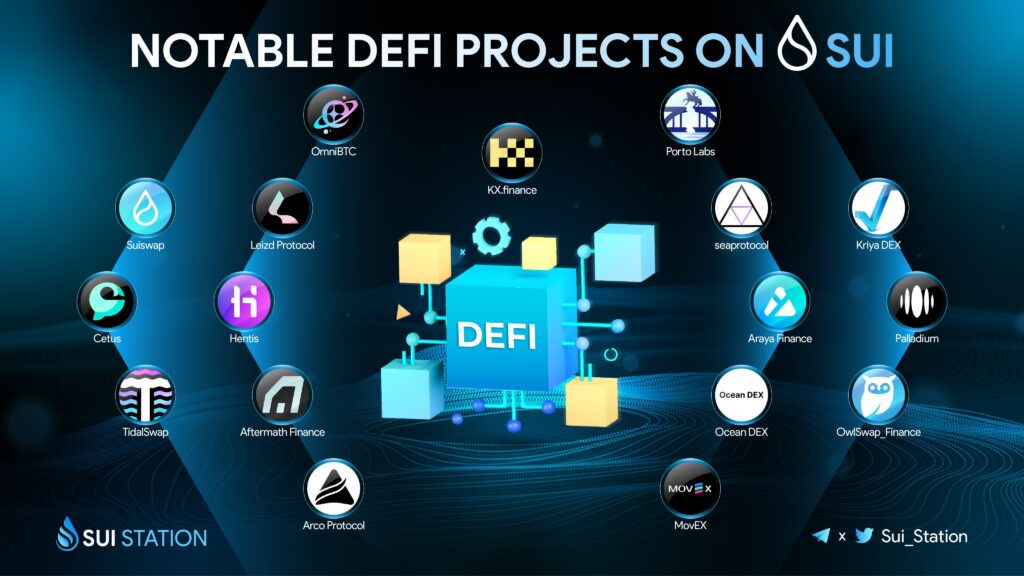
Does SUI coin have a future? Yes, but it is tied to execution. The network’s object-centric model and parallel execution capabilities offer a technical edge, but utility must outpace token unlocks. Projects like Bluefin and AlphaLend are building real yield, yet the ecosystem still needs to prove it can retain liquidity against Ethereum L2s and Solana.
How much will 1 SUI be worth in 2030? Predictions vary widely, from $2 to $15, depending on macro conditions. A conservative estimate assumes steady growth in total value locked (TVL) and developer activity, potentially placing SUI in the $4–$6 range. However, high inflation from token unlocks could suppress price appreciation if demand does not keep pace.
Which crypto will boom in 2026? While many assets compete for attention, SUI stands out due to its unique Move language architecture and rising DeFi infrastructure. Investors should focus on projects with tangible revenue models and active user bases rather than chasing low-cap memes. The 2026 landscape favors infrastructure plays that solve scalability and liquidity fragmentation issues.
No comments yet. Be the first to share your thoughts!