
Understand the Move object model
Sui’s object-centric architecture redefines how state is managed on-chain, serving as the foundation for high-performance DeFi. Unlike traditional account-based models that serialize transactions through a single global state, Sui treats every asset as an independent object. This distinction allows the network to process transactions in parallel, significantly increasing throughput for complex financial interactions.
In an account-based system, like that of Ethereum, every transaction must update the global state sequentially. This creates a bottleneck where the entire network waits for the slowest transaction. Sui avoids this by assigning unique identifiers to objects. When two transactions involve different objects, they can execute simultaneously without conflict. This parallelism is not just a theoretical improvement; it is the mechanical reason Sui achieves its high transaction finality and low latency.
For DeFi developers, this means smart contracts can interact with assets more freely. A swap, a loan, or a liquidity provision can happen in a single atomic transaction without waiting for network congestion to clear. The Move programming language reinforces this by enforcing strict type safety on objects, ensuring that assets are transferred or modified only according to predefined rules. This reduces the attack surface for common smart contract vulnerabilities.

Set up the Sui development environment
To begin building object-centric smart contracts on Sui, you need a local development environment that connects to the network. This setup ensures your Move compiler can validate your code and your CLI can interact with testnet or mainnet nodes.
The foundation of your workflow is the Sui Command Line Interface (CLI). This tool manages your wallet keys, deploys contracts, and executes transactions. Install the latest stable version using the official script:
curl https://release.sui.io/sui/install | bash -s -- --version latest
Verify the installation by checking the version number. This confirms your local environment is ready to communicate with the Sui blockchain infrastructure.

Sui uses the Move programming language, which requires a specific compiler to ensure type safety and object-centric logic. The Sui CLI bundles the necessary Move compiler tools, but you must ensure your project directory recognizes them. Run the following command to initialize your local Move toolchain:
sui move new my-sui-project
This command creates the standard directory structure, including the sources folder where your smart contract modules will reside. It also generates the Move.toml configuration file, which defines your project dependencies and package settings.
Before deploying to mainnet, you must configure your CLI to interact with the Sui testnet. This network provides free test tokens (SUI) for experimentation without risking real capital. Set your active environment to testnet using:
sui client envs
Select the testnet option from the list. You can then request testnet tokens from the official faucet to fund your development wallet. This step is critical for testing transaction costs and contract behavior in a live network environment.

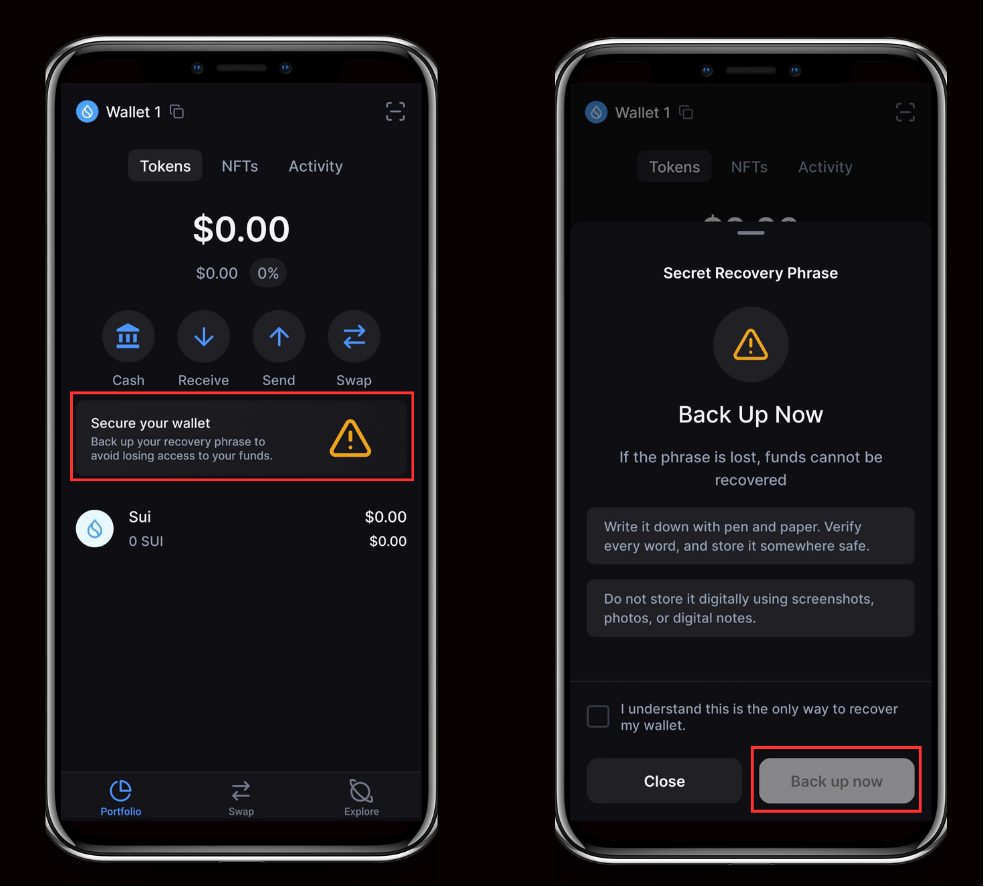
Your CLI needs a secure way to sign transactions. Generate a new key pair using the Sui CLI to create a default wallet address. This address will be used to deploy your object-centric contracts and interact with DeFi protocols on Sui.
sui client new-address ed25519
Save the output securely. You will need this address and its associated secret key to authorize transactions. For production environments, consider using a hardware wallet or a more secure key management strategy.
Design the core DeFi primitive
Start Sui DeFi with the constraint that matters most in real life: space, timing, budget, skill level, maintenance, or availability. That first constraint should shape the rest of the plan instead of appearing as an afterthought. Keep the first pass simple enough to verify. Compare the main options against the same criteria, remove choices that only work in ideal conditions, and save optional upgrades for later.

Test and deploy the smart contract
Before sending object-centric contracts to mainnet, run unit tests to verify state transitions and gas usage. Sui’s Move tooling provides a local execution environment that simulates the blockchain without spending real tokens.

Use sui move test to execute all test functions in your Move module. This command compiles the bytecode and runs each test in a sandboxed environment. Check the output for any assertion failures or panics. This is your first line of defense against logic errors in object ownership or transfer mechanisms.
Review the gas meter during test runs. Move on Sui charges gas per operation, so inefficient code can make your DeFi protocol too expensive for users. Use the #[test_only] annotation to access internal state if needed for deeper inspection, but keep production code lean. Aim to minimize object reads and writes to keep transaction costs low.
Deploy your verified bytecode to the Sui testnet using sui client publish. This step confirms that your contract interacts correctly with the actual blockchain network, including address resolution and object ID generation. Use a testnet faucet to obtain SUI tokens for transaction fees.
Once testnet validation is complete, publish the same bytecode to mainnet. Ensure your object ownership rules are strict and that no external calls can manipulate state unexpectedly. Sui’s object-centric model requires careful attention to who holds the authority to transfer each asset.
When building, prioritize protocols with proven TVL stability and clear tokenomics. For most applications, integrating a high-TVl DEX like Cetus for swap functionality and a lending protocol like Scallop for yield or borrowing provides a solid foundation. Always verify contract audits and current liquidity depth before committing resources.
Check Sui price and market trends
Track the SUI token price to contextualize your development work within the current market cycle. Live market data helps you gauge valuation and potential impact. Monitor total value locked (TVL) and on-chain activity to understand network health beyond simple price action. DefiLlama provides a comprehensive overview of Sui metrics, including TVL, stablecoin market cap, chain fees, and DEX volume.
https://defillama.com/chain/sui
While price predictions vary, some analysts suggest SUI could approach $5 by 2026 if market cycles favor Layer 1 assets and institutional interest rises. However, such a valuation depends heavily on strong adoption and buying momentum to absorb token unlock pressure.
Common questions about Sui DeFi
Can Sui reach $5?
SUI could approach $5 by 2026 if market cycles favor Layer 1 blockchain assets, Sui DeFi activity grows, institutional interest rises, and token unlock pressure is absorbed. Without strong adoption and buying momentum, such a price appears less likely. See the Bitcoin Foundation analysis for detailed valuation drivers.
What makes Sui’s object-centric model different?
Sui treats digital assets as objects with unique IDs, allowing parallel processing of transactions. This contrasts with account-centric models where all transactions for one account are processed sequentially. The result is higher throughput and lower latency for complex DeFi operations.
Is Sui DeFi safe for smart contracts?
Sui uses Move, a language designed for safety and resource management. Move prevents common vulnerabilities like reentrancy attacks by ensuring resources cannot be duplicated or lost. This makes Sui’s object-centric architecture particularly robust for high-value DeFi protocols.
No comments yet. Be the first to share your thoughts!