
Why Sui Move changes DeFi development
Sui Move shifts the foundation of DeFi development by replacing account-based models with an object-centric architecture. In traditional EVM chains, state is tied to an address, forcing transactions to wait for global consensus on that single state. Sui Move treats every asset and contract as a unique, independent object. This distinction allows the network to process transactions in parallel rather than in a strict sequence.
This parallel execution capability means that if two users trade different assets, Sui can validate both transactions simultaneously. There is no need to wait for the previous block to fully settle before starting the next. The result is significantly higher throughput and lower latency for complex DeFi operations like arbitrage or liquidity provision.
The language itself, Move, is designed for safety and efficiency in managing digital assets. It enforces strict resource ownership rules, preventing common vulnerabilities like reentrancy attacks that plague Solidity contracts. By combining these safety guarantees with Sui’s object model, developers can build DeFi primitives that are not only faster but also more secure by design.
For developers accustomed to Ethereum, this represents a fundamental change in how state is managed. Instead of fighting against sequential bottlenecks, you work with a system built to handle concurrent operations. This makes Sui Move a preferred tool for modern DeFi applications that require high speed and low cost without sacrificing security.
Set up the Sui Move development environment
Before writing your first smart contract, you need a working local environment. This section walks you through installing the Sui CLI and initializing a new project structure. These tools allow you to compile, test, and simulate Sui Move code locally before deploying to the network.

The Sui CLI is your primary interface for interacting with the Sui blockchain. Install it using the official package manager. Run the following command in your terminal to fetch the latest stable release:
cargo install --locked sui-cli
After installation, verify the setup by checking the version. This confirms that the binary is correctly placed in your system path.
sui --version
Once the CLI is ready, create a new project directory. The sui move new command generates a standard Move package structure, including the sources folder where your .move files will live.
sui move new my_first_sui_move_app
cd my_first_sui_move_app
This command sets up the necessary Move.toml configuration file, defining your package dependencies and version constraints. You can now start editing the default modules in the sources directory.
Compile your code to check for syntax errors and type safety. Sui Move is strict about resource management, so the compiler will flag any potential leaks or misuse of owned objects.
sui move build
If the build succeeds, run the built-in test suite. This executes any test functions defined in your modules. Passing these local tests is your proof that the logic holds before you attempt to publish.
sui move test
Map DeFi Concepts to Sui Objects
Sui Move treats every asset as an object with a unique ID, explicit ownership, and strict type safety. This model replaces the flat account balances found in EVM chains with a graph of interconnected resources. To build DeFi primitives, you must design your data structures to reflect this object-centric reality from the start.
Define Your Asset Structs
Start by defining the core data structures that represent value. In Sui Move, these are struct types that implement store, allowing them to be held in accounts or other objects. For a lending primitive, you might define a LoanPosition struct that tracks the collateral, the debt, and the timestamp of the last update. Ensure each field is typed explicitly to prevent mixing incompatible assets.
struct LoanPosition has key, store {
    id: UID,
    collateral_amount: u64,
    debt_amount: u64,
    last_updated: u64,
}
Manage Ownership and Transfer
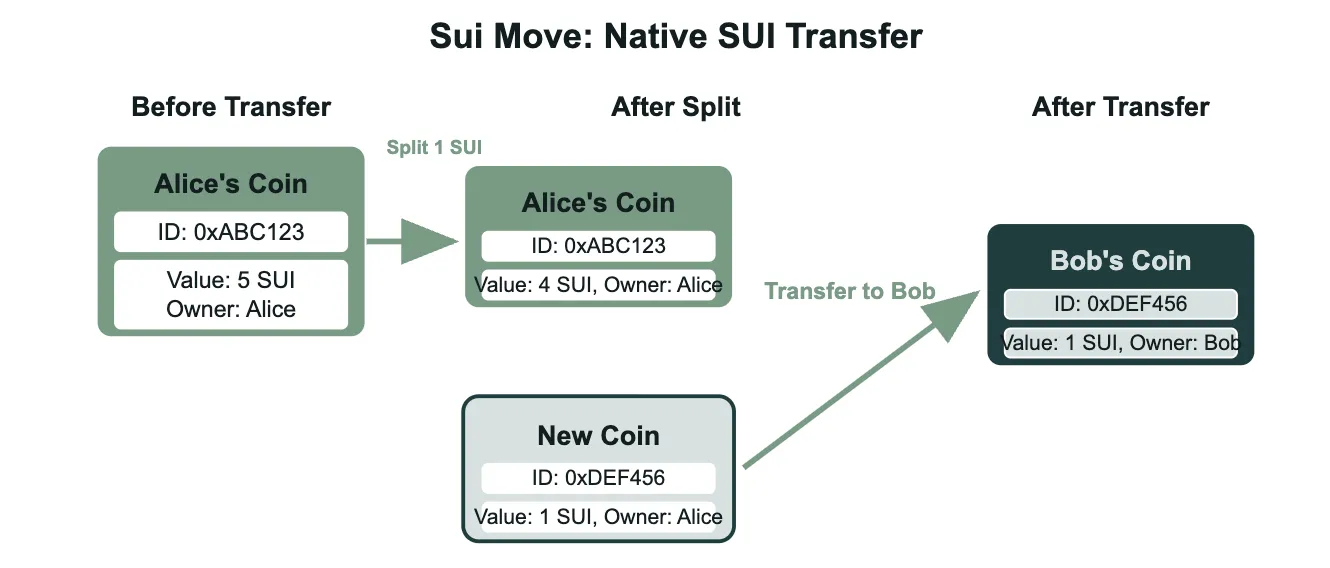
Ownership in Sui is explicit. When a user deposits assets, you transfer the input tokens into the protocol’s pool object and mint a receipt token (like an LP token or a receipt loan position) back to the user. This receipt becomes the new object that represents their claim. Because Sui objects are immutable once created, updates require destroying the old object and creating a new one with the updated values.
This design prevents common vulnerabilities like reentrancy attacks, as state changes are atomic and tied to the object’s lifecycle. The Move compiler enforces that only the owner of an object can modify it, ensuring that your DeFi logic remains secure without complex permission checks.
Handle Liquidity Pool State
For a liquidity pool, create a Pool object that holds the reserves of each token. This object acts as the central ledger for all trades. When a user swaps tokens, you transfer their input token into the Pool object and transfer the output token from the Pool to their wallet. The pool’s internal state updates automatically based on the balance changes, or you can track it explicitly in a separate field if needed for complex fee logic.
By keeping the pool state within a single object, you simplify auditability and reduce the risk of state inconsistency. Each interaction is a clear transfer of ownership, making the flow of value transparent and verifiable on-chain.
Implement atomic swaps with Programmable Transaction Blocks
Programmable Transaction Blocks (PTBs) let you bundle multiple operations into a single atomic unit. In DeFi, this means you can execute a swap, deposit liquidity, and claim rewards in one go. If any step fails, the entire transaction reverts. No partial state changes occur. This eliminates the risk of stuck funds or incomplete states that plague multi-transaction flows.
Sui Move provides the primitives to build these complex workflows securely. You construct the transaction object, add individual moves, and then execute it as a single atomic block. This approach is standard for advanced DeFi primitives on Sui.
Step 1: Initialize the ProgrammableTransactionBlock
Start by creating an empty ProgrammableTransactionBlock object. This object acts as the container for all your operations. You will add moves, transfers, and logic to it before execution.
let ptb = ProgrammableTransactionBlock::new();
Step 2: Add Input Assets and References
Pass the assets you want to swap or deposit as input objects. Use tx_input(Object, ...) for owned objects and tx_input(TxContext, ...) for the signer context. This binds the resources to the transaction scope.
let coin_a = tx_input(Object, ...);
let coin_b = tx_input(Object, ...);
let ctx = tx_input(TxContext, signer);
Step 3: Execute the Swap Logic
Call the swap function from your DEX module. Pass the input coins and the context. The function returns the swapped assets. Capture these outputs for the next step.
let swapped_coins = dex::swap(coin_a, coin_b, ctx);
Step 4: Deposit and Claim Rewards
Use the swapped assets to deposit into a liquidity pool or yield farm. Call the deposit function and capture the LP tokens or reward points. These become the final outputs of your transaction.
let lp_tokens = pool::deposit(swapped_coins, ctx);
Step 5: Finalize and Execute
Add the final outputs to the PTB. Then, execute the block. The Sui runtime ensures all steps succeed or fail together. If the swap fails, the deposit never happens.
ptb.publish_outputs([lp_tokens]);
let tx_hash = ptb.execute();
Step 6: Handle Errors and Reverts
If any move fails, the transaction reverts. Check the transaction status to confirm success. Use TransactionEffects to verify that all steps completed without error.
let effects = get_transaction_effects(tx_hash);
assert!(effects.status.success, 1); // 1 = success
Common Pitfalls
- Forgetting Inputs: Always pass required objects. Missing inputs cause immediate failure.
- Type Mismatches: Ensure coin types match the DEX module expectations.
- Gas Limits: Complex PTBs consume more gas. Set appropriate limits.
Why PTBs Matter for DeFi
PTBs enable atomicity in Sui Move. You can build complex strategies without worrying about intermediate states. This is essential for secure DeFi applications.
Test your contracts on the Sui Testnet
Before moving to mainnet, you need to verify that your DeFi primitive behaves correctly under network conditions. The Sui Testnet provides a sandbox environment that mirrors mainnet economics but uses free, faucet-dispensable SUI tokens. This section walks you through deploying your module and running integration tests.
Navigate to the Sui Faucet and request testnet SUI for your wallet address. Ensure you have enough balance to cover transaction fees for deployment and subsequent test calls. Without sufficient funds, your deployment will fail immediately.
Use the sui client publish command against the testnet endpoint. This uploads your compiled Move bytecode to the chain. Once confirmed, note the package ID and module name returned in the transaction digest. You will need these identifiers to call your functions in the next step.
Execute your test suite using the Sui CLI or your preferred testing framework (such as mysten/sui in TypeScript). Call your DeFi primitive’s entry functions to verify state changes, token transfers, and error handling. Check that the package ID matches your deployment and that the module exports are accessible.
Inspect the transaction effects and events in the Sui Explorer or via CLI. Look for any unexpected reverts or gas spikes. If your contract behaves as expected, you are ready for mainnet deployment. If errors persist, update your Move code and repeat the deployment cycle.
Common Sui Move pitfalls for DeFi developers
Porting DeFi logic from EVM chains to Sui requires shifting how you think about asset ownership. In Sui, objects are distinct entities with unique IDs and owners, rather than just balances in a contract storage. This architectural difference creates specific traps for developers accustomed to Solidity’s mapping or balanceOf patterns.
Another frequent error involves ignoring gas limits and transaction size constraints. Sui transactions have a maximum size limit, and complex DeFi operations involving multiple object transfers can quickly exceed this threshold. Unlike EVM chains where gas is consumed per operation, Sui charges for the entire transaction bundle. If your logic involves iterating over large arrays of positions or tokens, you risk transaction failure due to size limits rather than computational cost.
Finally, be cautious with type safety when handling generic types. Move’s strong typing prevents many runtime errors, but incorrect type parameters in generic functions can lead to compile-time failures that are difficult to debug. Ensure your generic constraints match the object capabilities you are trying to access. Double-check your imports from the std::type module to avoid namespace collisions that can obscure the actual error.
Sui Move Launch Checklist
Before deploying your DeFi primitive to the Sui mainnet, verify these items to ensure the code is secure and ready for production.
-
Unit Tests: Run sui test with full coverage on all Move modules.
-
Formal Verification: Use sui check to validate invariants and resource safety.
-
Testnet Deployment: Deploy to the Sui Testnet and run integration tests with real tokens.
-
Audit Report: Obtain a third-party security audit for complex logic.
-
Documentation: Add MoveDoc comments to all public functions and structs.
These steps prevent common vulnerabilities and ensure your Sui Move contracts perform reliably under load.
Frequently Asked Questions About Sui Move
Below are common questions from developers starting with Sui Move. These answers address the specific syntax, tooling, and performance characteristics that affect daily development.
No comments yet. Be the first to share your thoughts!