
Set up your Sui development environment
Building high-frequency DeFi applications on Sui requires a precise toolchain. Unlike traditional blockchains, Sui relies on the Move programming language and a specific object-centric data model to achieve parallel transaction processing. Getting the local environment right is the first step toward leveraging this performance.
Follow this sequence to install the necessary binaries and configure your workspace.

Use the official installer to download the latest Sui binary. This single executable handles node operations, wallet management, and client interactions.
curl https://get.sui.io -sSf | sh
Verify the installation by checking the version. This confirms that the binary is accessible from your command line.
sui --version

Sui smart contracts are written in Move, which compiles via the Rust toolchain. Install Rust using the standard installer to ensure compatibility with the Move compiler.
curl --proto '=https' --tlsv1.2 -sSf https://sh.rustup.rs | sh
source $HOME/.cargo/env
This step installs cargo and rustc, which are required to compile your Move packages before deployment.

The sui binary alone is not enough for development. You need the Sui CLI for local node management and the Move Language Server (MLS) for IDE integration.
cargo install --locked --git https://github.com/MystenLabs/sui.git --branch main sui
cargo install --locked --git https://github.com/MystenLabs/sui.git --branch main move-analyzer
These tools allow you to compile, test, and deploy Move packages locally before touching the mainnet or testnet.

For a smooth development experience, configure your editor to use the Move Language Server. Most popular editors like VS Code or IntelliJ have extensions that support Move syntax highlighting and basic linting.
This setup provides real-time feedback on Move code, helping you catch structural errors before they reach the blockchain.
Structure assets using Sui objects
Most blockchains use an account-based model where every user has a single bank account-style address. To move value, the entire account state must be updated. This creates a bottleneck: transactions involving the same user must happen one after another. Sui takes a different approach by structuring assets as Sui objects. Think of these objects as individual, self-contained boxes. Each box holds its own data, ownership rules, and logic. This object-centric data model is the foundation of Sui’s high-performance DeFi capabilities, allowing the network to process many transactions at the same time instead of waiting for a single account to finish its work.
In a traditional EVM-style chain, if two people send tokens to the same user, the network must serialize these actions. It processes the first transfer, updates the account, then processes the second. Sui’s parallel execution engine looks at the objects involved in each transaction. If two transactions touch different objects—like two different NFTs or separate token pools—they can be processed simultaneously. This parallelism is what allows Sui to deliver near-instant finality and high throughput, which is critical for high-frequency trading and complex DeFi strategies that rely on speed.
<Image src="/cdn/articles/5455bafe-3e97-4309-b80f-6495555da7b1-f6bd028e.png" alt="Sui blockchain DeFi" />
Understanding this shift from accounts to objects is essential for building on Sui. It changes how you think about state management. Instead of tracking balances in a global ledger, you track ownership of specific objects. This granularity enables the composability and speed that define the Sui DeFi stack. For more details on how this architecture supports high-frequency trading, see the Sui DeFi Stack.
Write Move Code for Parallel Execution
To build high-frequency DeFi on Sui, your Move code must explicitly allow the Sui runtime to execute transactions simultaneously. Unlike blockchains that process transactions in a strict linear order, Sui uses an object-centric data model. This means the runtime can process multiple transactions in parallel as long as they do not access the same object. If two transactions try to modify the same object at the same time, a conflict occurs, and one must wait. For high-frequency trading strategies, avoiding these conflicts is the primary bottleneck. You design for parallelism by structuring your logic so that independent operations touch independent objects.
1. Identify Non-Conflicting Object Access
The first step is to map your trading logic to Sui objects. In Move, every asset is an object with a unique ID. When writing a swap or arbitrage function, ensure that the inputs and outputs are distinct objects. For example, if you are trading SUI for USDC, the transaction consumes the user’s SUI object and produces a new USDC object. These objects are separate, so the runtime can process this trade alongside other trades that do not involve SUI or USDC. Avoid designing functions that lock or mutate shared global state unless absolutely necessary, as this serializes execution and kills throughput.
2. Use Shared Objects for Global State Carefully
Some DeFi protocols require shared objects, such as a liquidity pool registry or a global fee collector. These objects are accessed by many transactions. When multiple transactions touch a shared object, Sui serializes those specific transactions to maintain consistency. To maintain high frequency, minimize the number of shared objects your strategy touches. Instead of having one massive shared pool object that every trade updates, consider sharding liquidity across multiple smaller pool objects. This allows trades in different shards to execute in parallel, significantly increasing the total number of transactions per second your protocol can handle.
3. Structure Functions for Atomicity and Independence
Move functions should be designed to be atomic and independent. Use the transfer and split functions to break down large assets into smaller, manageable objects before processing. This reduces the size of the objects being locked during execution, lowering the chance of contention. Additionally, avoid nested calls that depend on the output of another transaction within the same block. High-frequency trading relies on speed; if your code waits for a previous internal call to complete before proceeding, you lose the benefit of parallel execution. Keep the logic linear within the transaction but independent across transactions.
4. Validate and Test with the Sui Simulator
Before deploying to mainnet, use the Sui simulator to test your parallel execution logic. The simulator allows you to send multiple transactions simultaneously and observe how the runtime handles conflicts. Check for any unintended serialization points where your transactions might be blocking each other. Adjust your object usage based on these results. If you find that certain functions are causing bottlenecks, refactor them to use more distinct objects or reduce the scope of shared state. This iterative testing ensures your high-frequency strategy can sustain the throughput required for competitive trading.
Compare top Sui DeFi protocols
Building on Sui requires understanding where liquidity pools and lending markets actually sit. The ecosystem is still maturing compared to older chains, so protocol selection directly impacts your transaction costs and slippage. We are looking at the current leaders in high-frequency DeFi on Sui Blockchain to help you choose the right infrastructure.
The table below breaks down the primary metrics for the top protocols. Note that TVL (Total Value Locked) fluctuates daily; always verify live numbers on DefiLlama before deploying capital.
| Protocol | Type | TVL (Est.) | Key Feature |
|---|---|---|---|
| Cetus | DEX | $180M+ | Concentrated liquidity AMM |
| Suiswap | DEX | $40M+ | Standard AMM & Pools |
| Scallop | Lending | $25M+ | Flexible borrowing rates |
| SuiFi | Yield | $15M+ | Aggregated yield strategies |
For developers, the choice often comes down to the underlying liquidity model. DEXs like Cetus and Suiswap offer the highest volume for trading, while lending platforms like Scallop provide capital efficiency for leveraged positions. Always audit the smart contract interactions for gas optimization, as Sui's parallel execution model rewards efficient code.
Deploy and monitor on-chain performance
Deploying high-frequency DeFi on Sui requires a disciplined approach to gas management and real-time telemetry. Because Sui processes transactions in parallel using its object-centric model, a single misconfigured call can stall your application or drain your budget faster than expected.
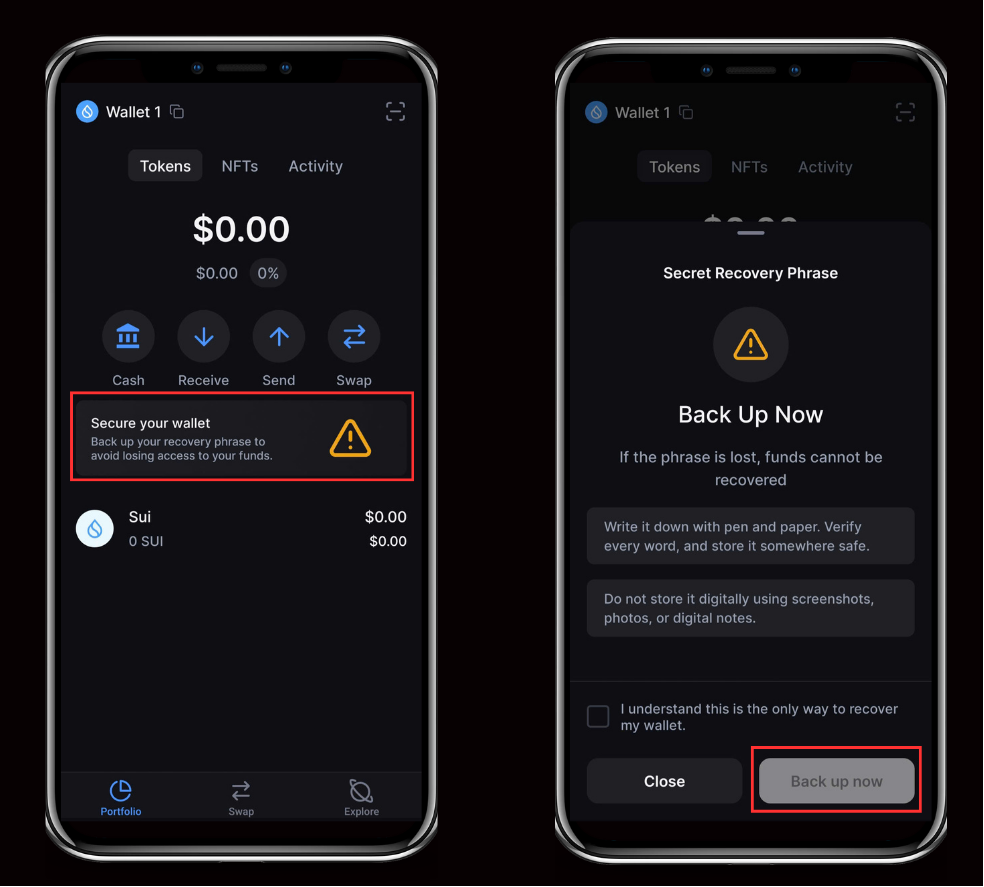
Before deployment, run sui move build to ensure your Move modules compile without errors. Use the Sui CLI to simulate transactions in a local environment. This step catches logic errors and gas miscalculations before they hit the mainnet, preventing costly failures during high-frequency execution.

Push your compiled module to the designated network (testnet or mainnet) using the sui client publish command. Record the published module ID and the address of the creator. This address becomes the anchor for all subsequent contract calls and is required for any interaction with your deployed logic.
High-frequency applications must explicitly set gas budgets. Use sui client gas to review current gas prices, which fluctuate with network load. Ensure your application logic includes retry mechanisms for failed transactions due to congestion. Sui’s parallel execution allows for high throughput, but your client-side rate limiting must match the network’s capacity to avoid request timeouts.
Track your application’s performance using on-chain explorers like SuiScan or dedicated analytics dashboards. Monitor transaction success rates, average gas fees, and latency. For deep liquidity insights, integrate with Sui Deepbook to analyze order book depth and slippage, ensuring your DeFi protocols remain competitive and efficient.
Frequently asked: what to check next
Common questions about Sui DeFi
Understanding the underlying mechanics of the Sui blockchain helps developers and users navigate its DeFi ecosystem with confidence. Below are answers to frequent inquiries regarding its architecture and operational model.
No comments yet. Be the first to share your thoughts!