
Set up a Sui-compatible wallet
Yield farming on Sui requires a non-custodial wallet to hold your SUI tokens and interact with decentralized applications. Unlike centralized exchanges, a self-custody wallet gives you direct control over your private keys, which is essential for accessing DeFi primitives like liquidity pools and lending protocols.
Start by selecting a wallet that supports the Sui network.
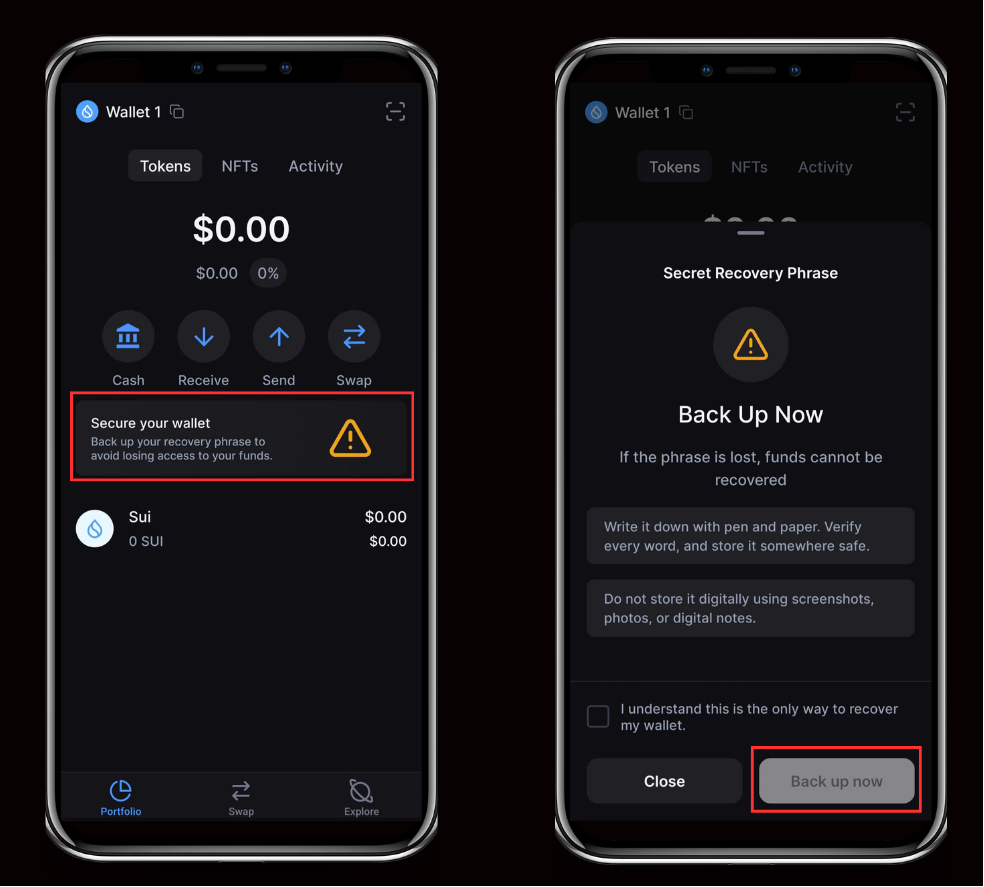
Download the wallet extension for your browser or the mobile app from official sources. During setup, the wallet will generate a recovery phrase (seed phrase). Write this phrase down on paper and store it in a secure, offline location. Never digitize this phrase or share it with anyone. This phrase is the only way to recover your assets if you lose access to your device.

Once installed, create a new account within the wallet. You will be prompted to set a strong password for local encryption. This password protects your wallet app on your device but is not your recovery phrase. Ensure your password is unique and not reused from other services.

Confirm that your wallet is connected to the Sui Mainnet. Most wallets default to this, but it is critical to verify before funding your account. Test the connection by checking your SUI balance (which should be zero initially) and ensuring the network status shows "Connected." Do not proceed to fund your wallet until you are certain you are on the correct network to avoid sending funds to the wrong chain.
Fund your wallet with SUI tokens
To interact with Sui DeFi, you need SUI tokens in your wallet. SUI serves as the gas currency for transactions and the primary asset for most yield farming strategies. Without it, you cannot approve swaps, provide liquidity, or claim rewards.
1. Buy SUI on a centralized exchange
Start by purchasing SUI on a major centralized exchange (CEX) like Coinbase, Binance, or Kraken. These platforms offer the deepest liquidity and often have the lowest fees for initial purchases. Search for "SUI/USDT" or "SUI/USD" and execute a market buy. Ensure the exchange supports SUI withdrawals; most do, but it is worth double-checking before you transfer funds.
2. Set up a compatible Sui wallet
You need a non-custodial wallet to hold your SUI. Popular options include Sui Wallet (the official browser extension), Ethos Wallet, or Surfer. Download the extension or app and create a new wallet. Crucially, write down your recovery phrase (seed phrase) on paper and store it offline. Never share this phrase with anyone or store it digitally. This phrase is your only way to recover your funds if you lose access to your device.
3. Withdraw SUI from the exchange
In your exchange account, navigate to the "Withdraw" section for SUI. Copy your wallet's receiving address from your Sui wallet app. Paste this address into the exchange's withdrawal field.
Important: Select the Sui Network as the withdrawal chain. Do not use Ethereum (ERC20) or other chains, as SUI on those networks is a wrapped token and may not work directly with native Sui DeFi protocols. Double-check the address character by character before confirming.
4. Verify the deposit
Once the exchange processes the withdrawal, the SUI tokens will appear in your Sui wallet. This usually takes a few minutes. Check your wallet balance to confirm the amount matches your expectation. You are now ready to swap SUI for other assets or stake it to begin farming yields.
Choose a DeFi primitive on Sui
Selecting the right yield farming primitive on Sui depends on your risk tolerance and whether you prioritize capital preservation or maximum yield. The Move-based architecture allows for distinct risk profiles across lending, decentralized exchange (DEX) liquidity, and liquid staking. Use the table below to compare the top protocols by Total Value Locked (TVL), typical APY range, and primary risk factor.
| Protocol | Primitive | TVL Rank | Typical APY Range | Primary Risk |
|---|---|---|---|---|
| Cetus | DEX (AMM) | 1 | 8-15% | Impermanent Loss |
| Sui Finance | Lending | 2 | 4-8% | Smart Contract |
| Scallop | Lending | 3 | 5-10% | Liquidation |
| SuiLend | Lending | 4 | 3-7% | Smart Contract |
| Sui Wallet | Liquid Staking | 5 | 6-9% | Staking Slashing |
Lending Protocols like Sui Finance and Scallop are ideal for conservative investors seeking predictable returns. You deposit assets like SUI or USDsui to earn interest from borrowers. The Move language ensures that collateralization ratios are enforced at the bytecode level, reducing the attack surface for oracle manipulation compared to some EVM chains. However, you must monitor health factors to avoid liquidation during market dips.
DEX Liquidity on Cetus or DeepBook offers higher yields but exposes you to impermanent loss. If you believe a token pair will remain stable or appreciate, providing liquidity can generate significant trading fees. DeepBook v3, recently launched, introduces centralized limit order books on-chain, offering deeper liquidity for professional traders but requiring more active management.
Liquid Staking via Sui Wallet or similar primitives is the simplest entry point. You stake SUI to secure the network and receive stSUI in return, which can then be used in other DeFi protocols for "yield on yield." This carries the lowest active risk but caps your upside to the network staking rate plus any additional DeFi leverage you apply.
Execute the yield farming transaction
Deploying capital into Sui DeFi requires a precise sequence of on-chain interactions. Unlike traditional finance, there is no intermediary to reverse a mistake. You must manually trigger the smart contract functions that move your assets into the liquidity pool or lending protocol.
The process relies on your wallet signing a transaction that calls the specific contract address for your chosen primitive. Because Sui uses the Move programming language, the transaction is validated against strict type safety rules before it is even broadcast to the network. This means the contract will reject any attempt to send unsupported asset types or invalid amounts, providing a layer of safety that prevents many common user errors.
Navigate to the official interface of the DeFi protocol. Click the connect button and select your Sui-compatible wallet. Ensure you are on the correct network mainnet and that your wallet is synchronized with the latest Sui ledger state.

Before you can deposit, the smart contract needs permission to access your tokens. Initiate an approval transaction for the specific asset (e.g., SUI, USDC) you intend to farm. This is a separate transaction from the deposit itself. Verify the gas cost and the approved amount matches your intent.
Enter the amount of assets you wish to yield farm. The interface will generate a transaction payload. Review the details carefully: check the recipient contract address and the function being called. In Move-based systems, the transaction will fail if the input types do not match the contract’s strict signatures.

Your wallet will display a summary of the action. Look for any warnings about high gas fees or slippage if you are providing liquidity to a volatile pair. Confirm the transaction. The network will then process the block, and your assets will be locked in the protocol.
After the transaction confirms, you will typically receive LP tokens or a receipt token representing your share of the pool. Keep track of these tokens, as you will need them to withdraw your principal and accrued rewards later. Always verify the contract address on the official Sui documentation or the protocol’s verified GitHub repository to avoid phishing sites.
Manage and harvest your yields
Yield farming on Sui is not a set-and-forget strategy. As market conditions shift and the Sui ecosystem's TVL fluctuates, active management is required to preserve capital and maximize returns. The goal is to claim rewards efficiently while monitoring for impermanent loss and changing gas dynamics.
Before taking action, review your active positions. Check the current APY against the base rate and ensure the impermanent loss risk hasn't exceeded your threshold. Verify that the gas fees for your next transaction are covered by your SUI balance, especially as network activity changes.
Navigate to the protocol interface and select the "Claim" or "Harvest" option for your specific liquidity pool. This action converts your earned yield tokens into your wallet. Regular claims prevent reward dilution and allow you to compound your earnings or withdraw profits.
If the yield rate drops significantly or market volatility increases, consider rebalancing your assets into a more stable pool or withdrawing entirely. Use the protocol's exit function to withdraw your principal and any remaining rewards, ensuring you understand the slippage impact on your exit.
A quick pre-withdrawal checklist can save you from costly mistakes:
- Verify the current APY is still attractive compared to other pools.
- Check for any upcoming impermanent loss spikes in volatile pairs.
- Confirm your SUI balance covers the gas fees for the withdrawal transaction.
- Review the protocol's withdrawal schedule for any lock-up periods.
Frequently asked questions about Sui DeFi
Understanding the mechanics of Sui helps you manage risk and costs before committing capital to yield farming. The following questions address the most common technical and security concerns for new participants.
No comments yet. Be the first to share your thoughts!