
What liquid staking means on Sui
Liquid staking on Sui solves the liquidity trap of traditional staking. When you stake SUI directly, your tokens are locked to secure the network, making them unavailable for trading or other financial activities. Liquid staking protocols change this by issuing a Liquid Staked Token (LST) in exchange for your staked SUI. This derivative token represents your staked position and continues to accumulate rewards, but it remains tradable and usable across the DeFi ecosystem.
This mechanism allows you to earn network staking rewards while maintaining the flexibility of your capital. Instead of sitting idle, your LST can be deployed in lending markets, liquidity pools, or yield aggregators. You effectively activate the utility of your assets without sacrificing the passive income generated by the consensus layer.
The process is straightforward. You deposit SUI into a liquid staking protocol, and the protocol stakes it on your behalf. In return, you receive LSTs at a 1:1 ratio (initially). As staking rewards accrue, the value of the LST typically appreciates relative to SUI, or you can claim rewards separately depending on the specific protocol design. This setup ensures your capital works harder, bridging the gap between long-term network security and short-term DeFi opportunities.
Choose a liquid staking protocol
Selecting a liquid staking protocol is the most critical step in securing your yield. Your choice determines not only your base reward rate but also the stability of the derivative token you receive. A reputable protocol minimizes the gap between your staked SUI and the market value of the liquid staking token (LST).
When evaluating options, focus on three metrics: Total Value Locked (TVL), protocol fees, and token peg stability. Higher TVL generally indicates greater network security and liquidity, making it easier to exit positions without significant slippage. Fees directly impact your net annual percentage yield (APY), so compare the total cost of staking across providers.
| Protocol | TVL (Approx.) | Fee Rate | LST Token |
|---|---|---|---|
| SpringSui | $45M+ | ~2% | sSUI |
| SuiFi | $12M+ | ~3% | sSUI-Fi |
| Lighthouse | $8M+ | ~2.5% | lsSUI |
SpringSui currently leads the market in TVL and liquidity depth, making it a safe default for most users. Its sSUI token maintains a tight peg to SUI due to high trading volume on decentralized exchanges. Always verify the current TVL on DefiLlama before committing funds, as market conditions shift rapidly.
Swap SUI for your liquid token
This section walks through the process of swapping your native SUI for a liquid staking token (LST). The LST represents your staked position and accrues rewards automatically, allowing you to use the token in other DeFi protocols while your SUI remains secured on the network.
1. Connect Your Wallet
Navigate to a supported Sui liquid staking platform, such as Aftermath, Turbos, or LiquidSui. Click the "Connect Wallet" button in the top-right corner and select your preferred wallet provider (e.g., Sui Wallet, Ethos, or Surf). Ensure your wallet is on the Sui Mainnet and has enough SUI to cover the staking amount plus a small buffer for transaction fees.
2. Enter the Swap Amount
Locate the staking interface on the platform. Enter the amount of SUI you wish to stake. The platform will display the expected exchange rate and the amount of LST you will receive. Keep in mind that some protocols may have minimum staking thresholds or maximum caps per transaction.
3. Confirm the Transaction
Review the details of the swap. Click "Stake" or "Swap" to initiate the transaction. Your wallet will prompt you to confirm the action. Once confirmed, the transaction will be broadcast to the Sui network. This process typically takes a few seconds to a minute.
4. Receive Your LST
After the transaction is confirmed, your wallet balance will update. You will see the new LST balance alongside your remaining SUI. This LST can now be used in supported DeFi applications to earn additional yield, while your original SUI continues to generate staking rewards.

Navigate to a supported Sui liquid staking platform and click "Connect Wallet." Select your wallet provider and ensure you are on the Sui Mainnet.
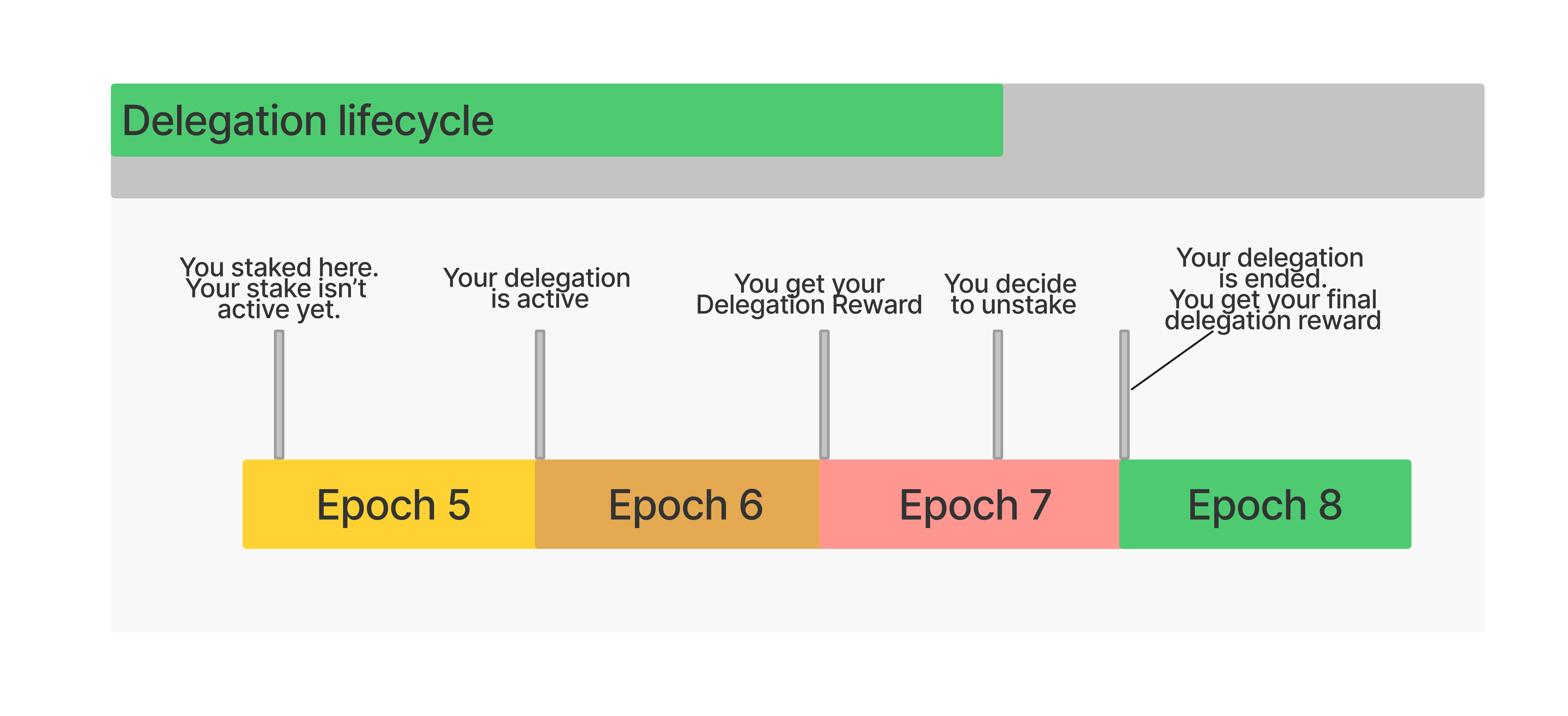
Enter the amount of SUI you wish to stake. The platform will display the expected exchange rate and the amount of LST you will receive.

Review the details and click "Stake" or "Swap." Confirm the transaction in your wallet. The process usually takes a few seconds to a minute.
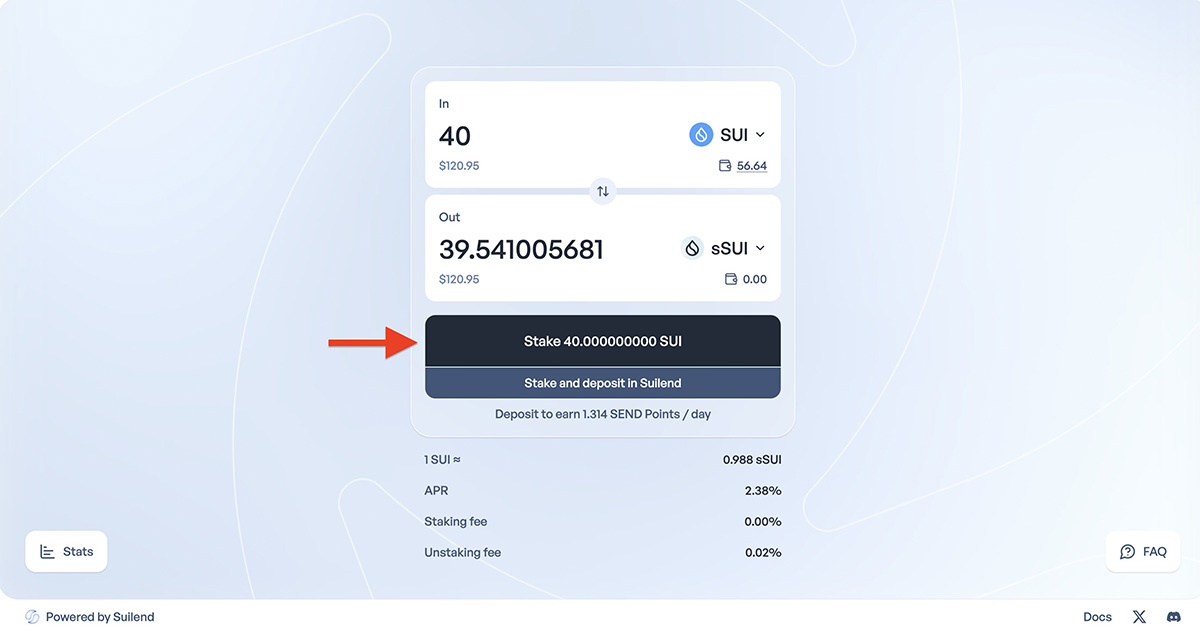
After confirmation, your wallet balance will update with the new LST. You can now use this token in supported DeFi applications.
Deploy your LST in DeFi
Now that you hold a liquid staking token (LST) like sSUI, your capital is no longer dormant. You can deploy it across the Sui DeFi ecosystem to generate additional yield on top of your base staking rewards. This process effectively layers returns, turning a single asset into a multi-stream income source.
The most common approach is lending your LST on a money market protocol. By depositing your sSUI, you provide liquidity to borrowers who need short-term capital. In return, you earn interest paid in the same token, which compounds alongside your original staking rewards. This method is generally lower risk than liquidity provision because you are not exposed to impermanent loss.
Alternatively, you can provide liquidity to decentralized exchange (DEX) pools. By pairing your LST with another asset, such as USDC, you earn trading fees from the pool. This strategy often offers higher potential returns but comes with increased complexity and risk, including the potential for impermanent loss if the token prices diverge significantly.
Browse established Sui DeFi platforms like Suilend for lending or Cetus for liquidity pools. Verify the protocol is audited and has a strong total value locked (TVL) to ensure security and liquidity depth.
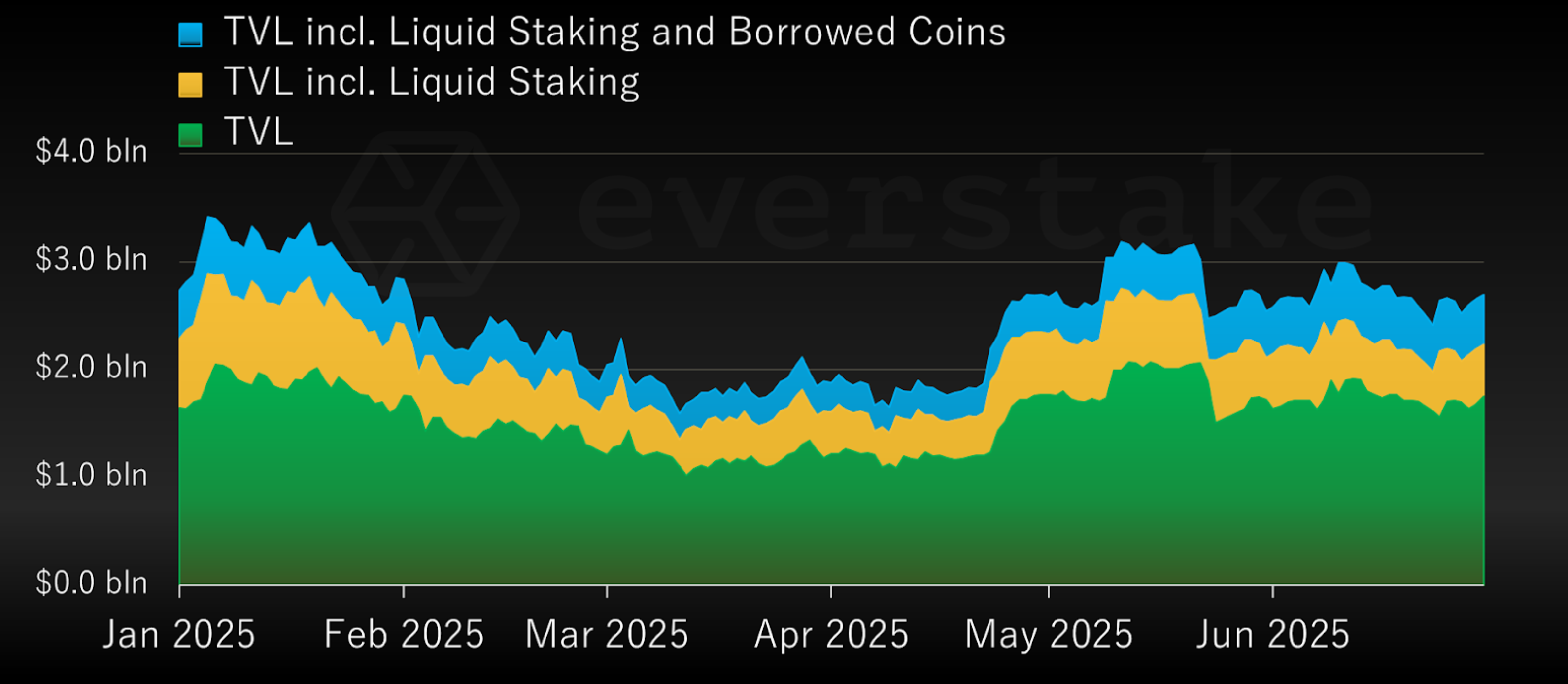
Open the chosen protocol’s interface and connect your Sui wallet. Ensure you are on the official website to avoid phishing sites. Double-check the contract address if the protocol provides it.
Navigate to the deposit or supply section. Select your LST (e.g., sSUI) and enter the amount you wish to deploy. Review the estimated APY and any associated fees before confirming the transaction.
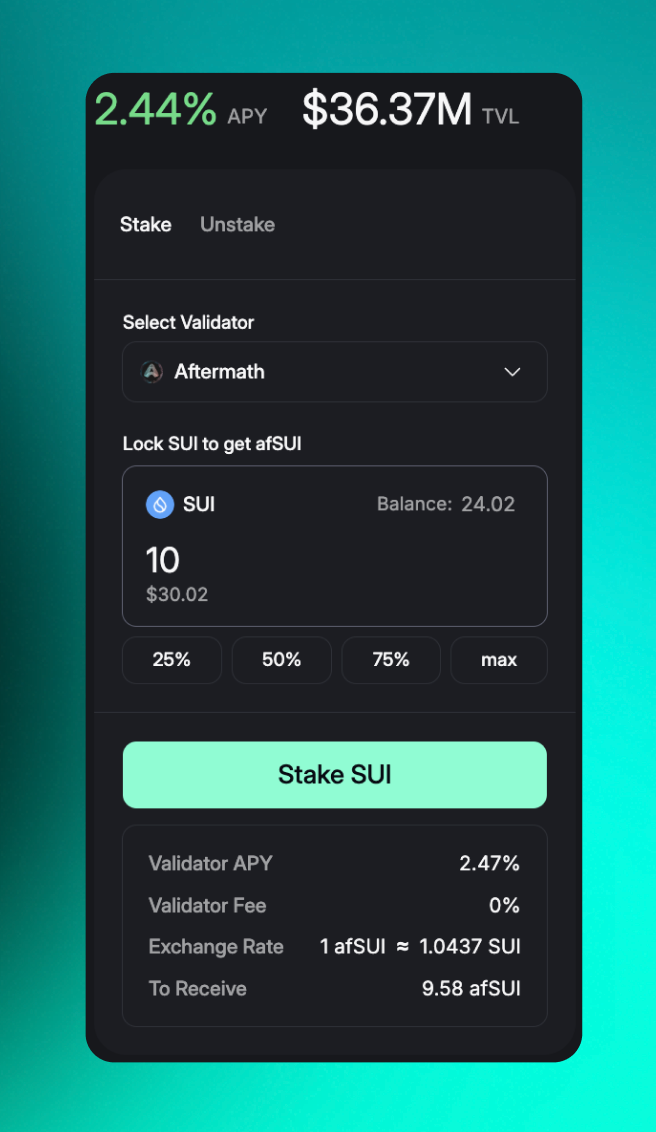
Once deposited, your LST will typically be converted into a receipt token (like cSUI) representing your share. You can monitor your earnings directly in the protocol dashboard. Regularly check the health factor if lending to ensure you remain undercollateralized.
Watch for slippage and smart contract risk
Liquid staking transforms your SUI into a derivative token, but that convenience comes with specific technical hazards. Unlike native staking, where you simply delegate to a validator, liquid staking protocols introduce smart contract layers and secondary market dynamics that can erode your yield or lock up your capital.
Peg deviation during market stress
Your liquid staked token (LST) is designed to track the value of SUI plus accrued rewards. However, during periods of high volatility or network congestion, the market price of the LST can deviate from its theoretical 1:1 peg. This slippage means you might receive fewer SUI tokens than expected when you unstake, or you may need to sell at a discount if you need immediate liquidity.
LST value can deviate from 1:1 with SUI during market stress. Always check the current peg ratio before unstaking or swapping.
Smart contract exploits
Every liquid staking protocol is a target for hackers. When you stake with providers like SpringSui, you are trusting their smart contracts to securely manage your assets. A vulnerability in the protocol’s code could lead to a total loss of funds. This risk is inherent to DeFi and exists regardless of the underlying blockchain’s security.
Liquidity limits to account for
While LSTs are marketed as "liquid," liquidity is not guaranteed. If you try to exit a large position during a market downturn, you might face thin order books or high slippage. Some protocols impose unstaking delays or fees to manage this risk, which can trap your capital when you need it most.
To mitigate these risks, diversify across multiple reputable protocols and monitor the peg health of your LSTs. Never stake more than you can afford to have tied up in smart contracts.
Quick checklist for Sui stakers
Before you commit capital to liquid staking, run through this final verification. Liquid staking on Sui adds a DeFi layer to your rewards, which increases complexity and potential points of failure. Use this list to ensure your position is secure and optimized.
-
Select a reputable liquid staking protocol (e.g., Spring Sui or Scrt Network)
-
Verify the APY matches current network rates and protocol fees
-
Deposit staked tokens into a trusted lending market (e.g., Suilend or Cetus)
-
Monitor your position for slashing events or smart contract risks
Liquid staking introduces smart-contract and liquidity risks beyond standard staking. Always audit the protocol's TVL and security history before depositing.
Once your tokens are staked, you aren't done. Regularly check the Sui Blog and protocol dashboards for governance updates or emergency pauses. Keeping your sSUI or other LSTs active in yield-generating DeFi protocols maximizes your total return, but requires constant vigilance.
No comments yet. Be the first to share your thoughts!