
What makes Sui DeFi primitives unique
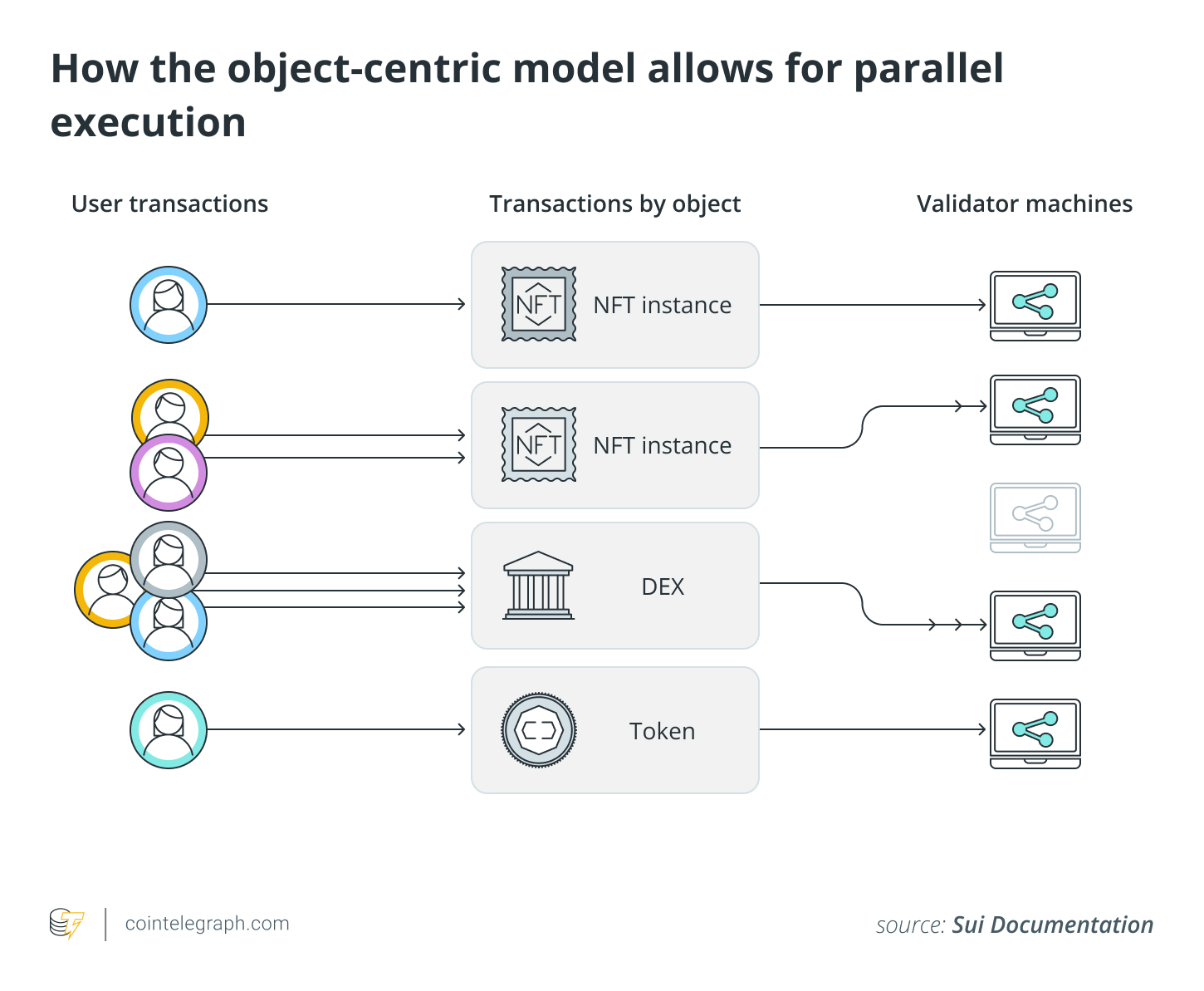
Sui redefines how digital assets exist on-chain by shifting from an account-based model to an object-centric architecture. In traditional blockchains like Ethereum, every token balance is just a number stored inside a user’s account contract. If two users want to trade, the transaction must update both accounts sequentially, creating a bottleneck. Sui flips this model: every asset—whether it’s a token, an NFT, or a complex financial instrument—is a distinct, independent object with its own unique ID and state.
This architectural shift turns assets into first-class citizens that can be moved, modified, or destroyed without touching a global ledger of accounts. Because objects are independent, the Sui MoveVM can process transactions involving different objects in parallel. Imagine a busy highway where each car has its own dedicated lane; in an account-based system, all cars must merge into a single lane, causing traffic jams. Sui’s object-centric design allows multiple DeFi operations to happen simultaneously, provided they don’t interact with the same object.
For DeFi developers, this means primitives are built around direct object interactions rather than account state updates. A liquidity pool isn’t a single monolithic contract holding all funds; it’s a collection of objects representing shares, reserves, and fees. When a user swaps tokens, they are simply transferring ownership of specific asset objects to the pool object. This granularity enables finer control over asset lifecycles and reduces the computational overhead of verifying global state changes.
The result is a foundation where complex financial instruments can be composed with atomic precision. Instead of relying on complex internal accounting within a single contract, Sui DeFi primitives leverage the object model to ensure that every transfer is verified against the object’s specific rules. This not only improves throughput but also enhances security by isolating the state of each asset, making it easier to audit and reason about the behavior of individual DeFi components.
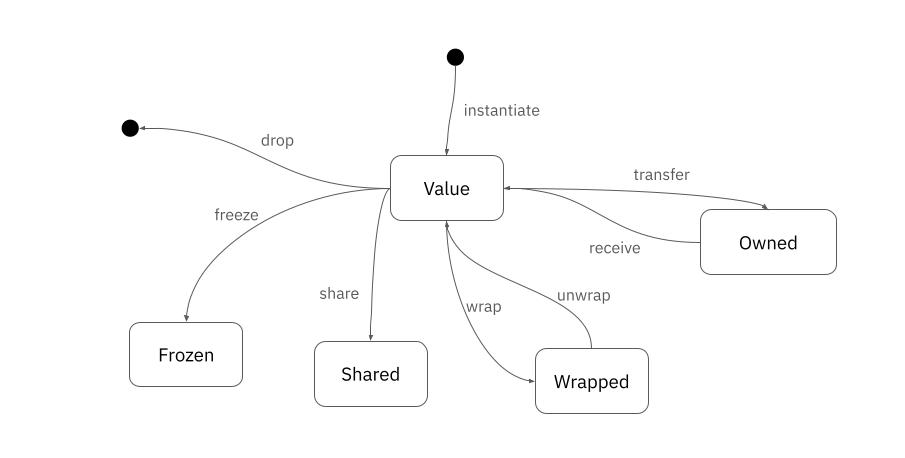
Core object types in Sui smart contracts
Sui moves away from the account-based model found in Ethereum, treating every asset as a unique object with its own ID and storage location. This object-centric architecture allows DeFi applications to parallelize transactions and manage state more efficiently. For developers, understanding the three primary object types—Assets, Dynamic Fields, and Kiosks—is essential for building scalable financial products.
Assets: The Foundation of Value
Assets are the basic units of value on Sui, represented as struct types with the key and store abilities. These abilities ensure that the object has a unique identifier and can exist independently in the global object store. In DeFi, this means tokens like SUI, USDC, or wrapped Bitcoin are not just entries in a user's account balance but distinct objects that can be locked, transferred, or used as collateral in a single transaction.
This model enables atomic composability. When a user deposits an asset into a lending protocol, the protocol doesn't just update a balance; it takes ownership of the specific asset object. This clarity reduces the risk of state corruption and allows multiple operations to happen in parallel, significantly boosting throughput for high-frequency trading or liquidity provision.
Dynamic Fields: Hierarchical State Management
Dynamic Fields allow objects to contain other objects, creating a hierarchical structure similar to a file system or a database table. This is critical for DeFi protocols that need to manage large amounts of state without bloating the main ledger. For example, a liquidity pool can use a Dynamic Field to store individual liquidity position objects, each representing a user's share of the pool.
Instead of maintaining a single massive state for all users, the pool object acts as a container. Each user's position is a separate object linked via a Dynamic Field. This structure enables efficient querying and modification of specific positions without affecting the entire pool, making it ideal for concentrated liquidity protocols and complex derivative products.
Kiosks: Digital Asset Marketplaces
Kiosks are specialized objects designed to manage and trade digital assets, particularly NFTs and other non-fungible tokens. They provide a standardized way to list, sell, and transfer assets with built-in fee mechanisms and ownership verification. For DeFi applications involving NFT-backed loans or fractionalized assets, Kiosks offer a reliable infrastructure for handling ownership transfers and ensuring compliance with marketplace rules.
By abstracting the complexities of asset trading, Kiosks allow developers to focus on the financial logic rather than the mechanics of ownership. This standardization accelerates the development of DeFi applications that integrate NFTs, enabling seamless interoperability between different protocols and marketplaces on the Sui network.

Liquidity and trading primitives on Sui
Sui’s approach to automated market makers (AMMs) diverges from traditional constant product models by leveraging its object-centric architecture to enable concentrated liquidity. In this model, liquidity is not stored in a single, monolithic pool contract. Instead, it is distributed across individual Pool objects, each representing a specific price range or asset pair. This structure allows the network to parallelize trade execution, as transactions affecting different liquidity objects can be processed simultaneously rather than sequentially.
This separation of concerns significantly reduces slippage for large trades. When a user swaps tokens, the protocol interacts only with the specific liquidity objects that fall within the relevant price range. Because these objects are independent, the state changes required for the trade do not lock up the entire pool, allowing for higher capital efficiency. Think of it as having multiple small, specialized storage units rather than one giant warehouse; you only access the unit you need, and others remain available for concurrent use.
The result is a trading environment that mimics the depth of order books without the latency of matching engines. Liquidity providers can allocate capital to specific price zones, knowing that their assets are being utilized efficiently during high-volume periods. This granular control is a direct benefit of Sui’s Move programming language, which treats these liquidity positions as distinct, transferable objects.
Comparison: Sui Concentrated Liquidity vs. Traditional AMMs
The table below highlights the architectural differences between Sui’s object-centric concentrated liquidity model and traditional constant product AMMs found on other Layer 1 blockchains.
| Feature | Sui (Concentrated Liquidity) | Traditional Constant Product AMM | User Impact |
|---|---|---|---|
| Capital Efficiency | High (liquidity concentrated in active price ranges) | Low (liquidity spread across 0 to infinity) | Better prices for traders; higher returns for LPs |
| Execution Model | Parallel (independent pool objects) | Sequential (single global pool state) | Lower latency and reduced gas costs |
| Slippage | Minimal for large trades within range | High for large trades | Improved trade execution for large volumes |
| Liquidity Management | Granular (position-level) | Pool-level | LPs can target specific market conditions |
Composable NFTs and real-world assets
On Sui, non-fungible tokens are not static images locked in a vault; they are active, composable objects. The architecture treats every NFT as a programmable entity that can hold other assets, carry logic, and evolve over time. This object-centric design allows developers to build DeFi primitives directly into the NFT standard, turning digital collectibles into functional financial instruments.
The Kiosk standard is the primary mechanism for this evolution. Unlike traditional marketplaces that rely on external smart contracts to manage sales, a Sui Kiosk is embedded directly within the NFT object. This means the NFT carries its own rules for transfer, rental, and fractionalization. When you interact with a Kiosk-enabled asset, you are interacting with the object itself, which reduces gas complexity and eliminates the friction of bridging between separate marketplace contracts.
This structure enables real-world utility by allowing assets to act as collateral or fractionalized shares. Because the NFT object can hold other Sui objects, a single token can represent a fraction of a high-value asset, such as real estate or luxury goods, while maintaining a unified ownership record. Lending protocols can then interact with these fractionalized objects directly, using the Kiosk’s built-in logic to manage risk and ownership transfers without external wrappers.
The result is a system where digital assets behave more like corporate shares than static JPEGs. By keeping the financial logic inside the object, Sui simplifies the developer experience and creates a more robust foundation for DeFi applications that require complex, multi-asset interactions.
Building scalable DeFi with Move
Sui’s object-centric model fundamentally changes how liquidity and assets are managed, moving away from the monolithic account structures common in Ethereum. Instead of treating user balances as mutable state within a single contract, Sui treats every asset as a unique, addressable object. This architectural shift allows DeFi protocols to handle assets independently, enabling parallel processing and reducing the bottlenecks that often plague high-throughput financial applications.
The Move language enforces strict safety through its resource system, which is critical for preventing common DeFi exploits like reentrancy attacks. In Move, resources cannot be copied or dropped implicitly; they must be explicitly moved or destroyed. This means that when a protocol interacts with an asset object, the ownership transfer is atomic and verifiable. If a transaction fails mid-execution, the asset state remains intact, eliminating the risk of partial state updates that can lead to fund loss or logical inconsistencies.
This safety model extends to how complex financial instruments are composed. Developers can bundle multiple asset objects into a single transaction, ensuring that all operations either succeed together or fail together. This atomicity simplifies the construction of advanced primitives like flash loans or concentrated liquidity positions, where precise control over asset flow is non-negotiable. By leveraging these object-centric primitives, builders can create protocols that are not only faster but also inherently more secure by design.
The result is a development environment where security is baked into the type system rather than added as an afterthought. This allows teams to iterate quickly on complex financial logic without constantly auditing for basic state manipulation errors. As the Sui ecosystem matures, this combination of parallel execution and rigorous type safety will likely become the standard for high-performance DeFi infrastructure.
Frequently asked questions about Sui DeFi
What is a DeFi primitive on Sui?
A DeFi primitive is a fundamental, standalone smart contract component used to build complex financial applications. On Sui, these primitives are object-centric. Instead of relying on shared global state like traditional accounts, Sui primitives treat assets as independent objects with unique IDs. This allows developers to compose logic around specific assets rather than abstract balances, enabling more flexible and parallelized financial interactions.
How does Sui handle liquidity in decentralized exchanges?
Sui-based decentralized exchanges utilize concentrated liquidity protocols to enhance capital efficiency. By allowing liquidity providers to allocate funds within specific price ranges, these protocols provide deep liquidity where it is needed most. This architecture enables users to execute large trades with minimal slippage compared to traditional constant product market makers, as the object-centric model allows for more precise and efficient liquidity management.
Is Sui a suitable blockchain for DeFi development?
Sui is a high-performance Layer-1 blockchain designed to make digital asset ownership fast, safe, and scalable. Its Move programming language and object-centric data model offer distinct advantages for DeFi builders. The ability to parallelize transaction processing means that DeFi protocols on Sui can handle higher throughput with lower latency, making it a robust environment for automated market making, lending, and other permissionless trading experiences.
No comments yet. Be the first to share your thoughts!