
Why Sui DeFi 2026 matters now
The narrative around decentralized finance has shifted from experimental prototypes to established infrastructure. In 2026, Sui has solidified its position as a high-performance blockchain capable of handling global-scale economic activity. The network’s architecture is not merely an incremental improvement over previous generations; it represents a fundamental rethinking of how blockchain data is structured and processed. This technical distinction is the primary reason Sui DeFi 2026 protocols are gaining traction among developers and users seeking speed and reliability.
At the core of this advantage is the Move programming language and its object-centric model. Unlike earlier blockchains that rely on account-based models, Sui treats every asset as a distinct, independent object. This design allows the network to process transactions in parallel rather than sequentially. When multiple transactions involve different objects, they can be validated simultaneously without contention. The result is a system that maintains low latency and high throughput even during periods of peak network activity. For DeFi applications, this means faster settlement times and a smoother user experience that rivals traditional financial systems.
The market has responded to these technical capabilities with significant capital inflow. By early 2026, the total value locked in Sui DeFi protocols reached approximately $2 billion, reflecting growing confidence in the ecosystem's stability and utility. Additionally, the network processed over $111 billion in stablecoin transfers, highlighting its role as a critical settlement layer for digital assets. This volume demonstrates that Sui is no longer just a testbed for new ideas but a robust platform for real-world financial operations.
As the DeFi landscape matures, the ability to scale efficiently without compromising decentralization becomes a decisive factor. Sui’s parallel execution engine and object-oriented data model provide the necessary foundation for complex financial primitives to thrive. This section explores the five best DeFi primitives on Sui for 2026, leveraging this technical edge to deliver superior yield opportunities and utility. The following recommendations are selected based on their integration with Sui’s unique architecture and their performance in the current market environment.
5 Best Sui DeFi Primitives for 2026 Yield
As the Sui DeFi 2026 landscape matures, selecting the right yield infrastructure requires understanding the underlying Move object mechanics. This roundup identifies five primitives that leverage Sui’s unique parallel execution and composability to deliver distinct yield opportunities.
1. Liquid staking derivatives for stSUI yield
Liquid staking derivatives transform idle SUI into productive capital without sacrificing liquidity. By staking native tokens, users receive stSUI, which accrues network rewards while remaining tradable. This mechanism allows investors to earn consistent yield from validator operations while maintaining the flexibility to deploy capital elsewhere in the Sui DeFi ecosystem during 2026.
2. Concentrated liquidity AMMs for trading fees
Concentrated liquidity AMMs maximize capital efficiency by allocating funds within specific price ranges. This approach generates higher trading fee yields compared to standard constant-product models. Traders providing liquidity in tight bands capture significant volume from high-frequency swaps, leveraging Sui’s parallel execution to process transactions rapidly and profitably in 2026.

3. Lending protocols for stablecoin interest income
Lending protocols facilitate permissionless borrowing and lending, creating a robust market for stablecoin interest income. Users deposit USDC or other stable assets to earn variable or fixed rates based on demand. This primitive offers a lower-risk yield avenue, capitalizing on the steady demand for leverage and liquidity within the expanding Sui DeFi landscape of 2026.
4. Yield aggregators for automated strategy rebalancing
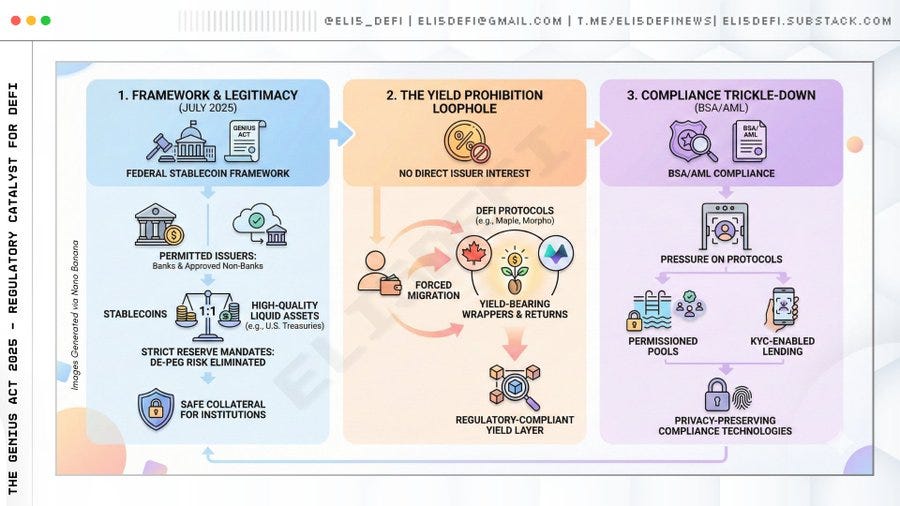
Yield aggregators automate complex DeFi strategies by constantly rebalancing portfolios across multiple protocols. These smart contracts seek the highest APYs by moving capital between lending, staking, and liquidity pools. This hands-off approach minimizes gas costs and maximizes returns through sophisticated algorithmic management, ideal for passive investors targeting Sui DeFi 2026 opportunities.
5. Perpetual futures for leveraged position returns
Perpetual futures enable leveraged exposure to SUI price movements without expiration dates. Traders can amplify their positions using margin, generating significant returns from directional bets. These derivatives provide sophisticated hedging and speculation tools, integrating seamlessly with Sui’s high-throughput blockchain to execute complex financial strategies efficiently in the 2026 market.

How Move objects enable parallel yield
Use this section to make the 5 Best Sui DeFi Primitives for Yield decision easier to compare in real life, not just on paper. Start with the reader's actual constraint, then separate must-have requirements from details that are merely nice to have. A practical choice should survive normal use, maintenance, timing, and budget. If a recommendation only works in an ideal situation, call that out plainly and give the reader a fallback path.
The simplest way to use this section is to write down the must-have criteria first, then compare each option against those criteria before weighing nice-to-have features.
Risks in the 2026 Sui Ecosystem
While Sui DeFi 2026 presents compelling yield opportunities, the ecosystem carries inherent technical and regulatory risks. The Move programming language introduces a unique object model that enhances security but requires developers to navigate complex ownership semantics. Smart contract vulnerabilities remain the primary threat, particularly in newer protocols that have not yet undergone extensive audit scrutiny.
Impermanent loss poses a significant challenge for liquidity providers, especially in concentrated liquidity pools where capital efficiency is high. Traders must understand that price divergence can erode principal value faster than in traditional constant product markets. Regulatory uncertainty also looms, as global frameworks for decentralized finance continue to evolve.
Investors should approach these opportunities with caution, prioritizing protocols with established track records and transparent governance structures. The technical uniqueness of Move objects offers resilience, but it does not eliminate the need for diligent due diligence.
Getting started with Sui DeFi 2026
To interact with Sui DeFi 2026 primitives, begin by securing your digital assets with a hardware wallet. Hardware wallets provide an offline layer of protection for private keys, ensuring that your participation in the network remains secure from online threats.
Next, bridge your assets to the Sui blockchain using a reputable cross-chain bridge. This step transfers your capital into the Sui ecosystem, where it can be utilized within high-performance DeFi protocols. Always verify the bridge's official documentation to avoid phishing sites.
Finally, connect your wallet to a Sui-compatible interface to interact with Move objects. These objects allow for unique composability and parallel processing, distinguishing Sui from other blockchains. Start with small transactions to familiarize yourself with the gas fees and transaction finality.


As an Amazon Associate, we may earn from qualifying purchases.
Frequently asked questions about Sui DeFi
What makes Sui DeFi different from other blockchains? Sui DeFi 2026 relies on the Move programming language, which uses unique object-oriented logic. This allows assets to be owned directly and processed in parallel, reducing congestion and enabling faster transaction finality compared to traditional smart contract models.
Is Sui DeFi secure for large capital deployment? The network has processed over $111 billion in stablecoin transfers, demonstrating robust infrastructure. The modular design isolates vulnerabilities, and the formal verification inherent in Move helps prevent common reentrancy attacks found in older EVM chains.
How accessible is Sui DeFi for new users? Sui prioritizes a seamless user experience with object-centric wallets. Users can interact with complex DeFi primitives without managing abstract token approvals, making yield farming and liquidity provision more intuitive for those new to the ecosystem.
No comments yet. Be the first to share your thoughts!